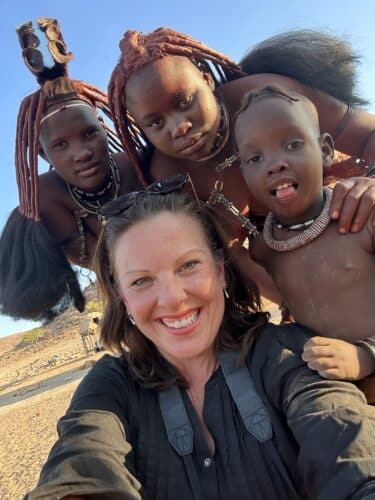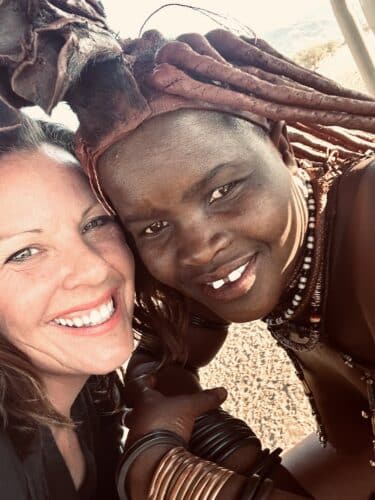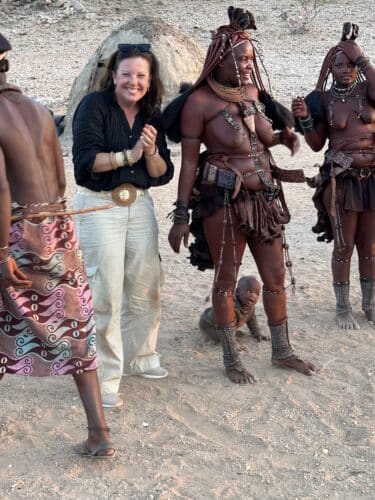
One of the true highlights – and privileges – of staying at Hoanib Valley Camp in Namibia’s Kaokoland region is the opportunity to enjoy a visit to a local Himba village.
Himba on a Namibia safari
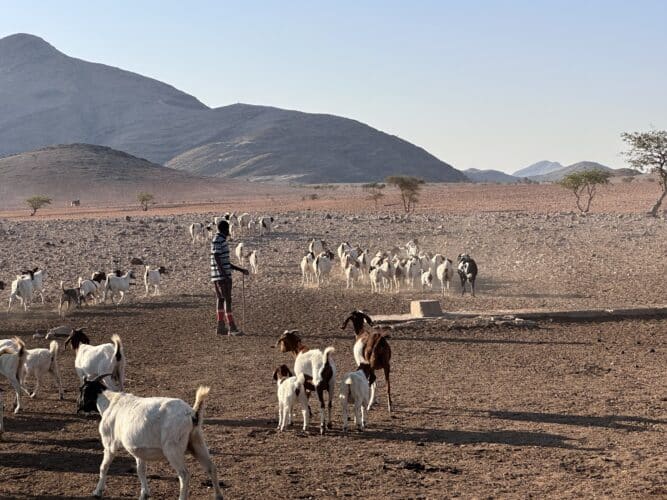
One of the last semi-nomadic groups in Africa, the Himba people have lived in this region for centuries, farming cattle and/or goats for both sustenance and economic purposes. We spent a day with a handful of these captivating people, to get a glimpse into their unique culture and way of life.
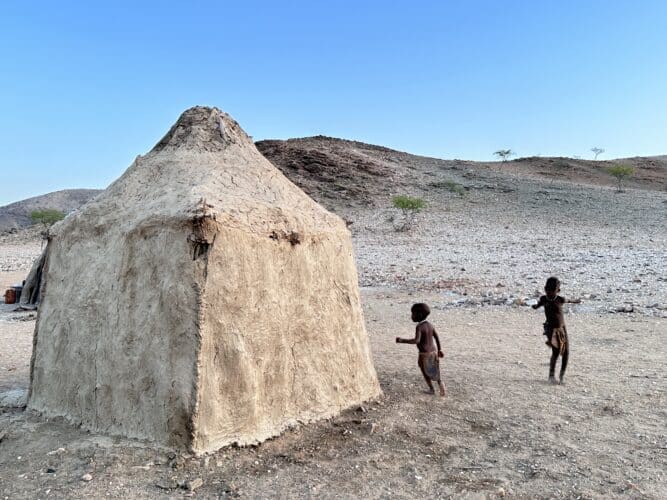
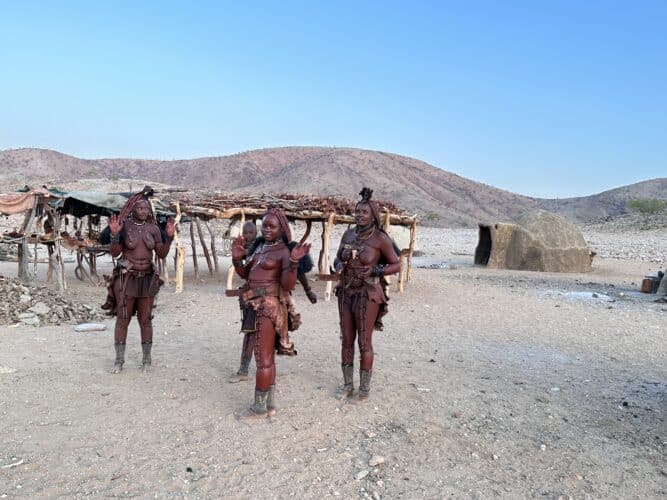
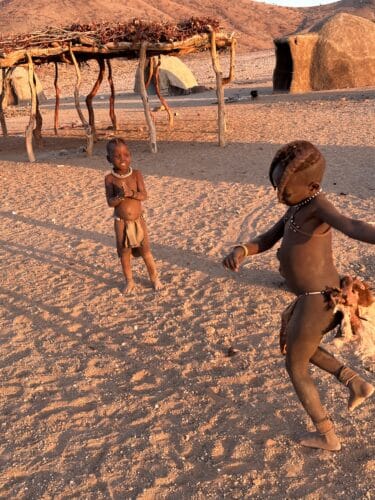
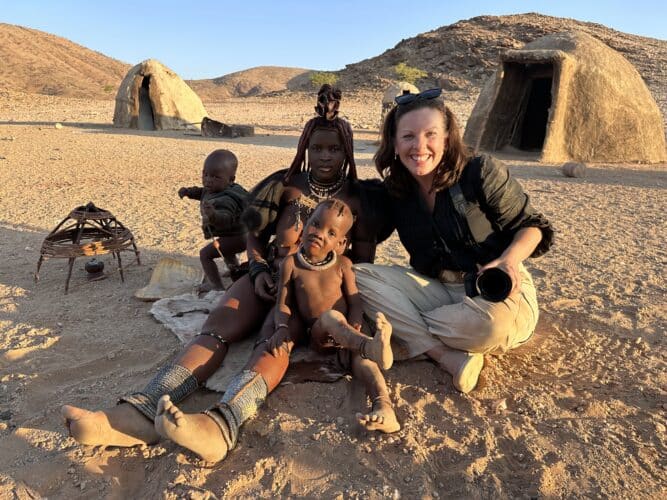
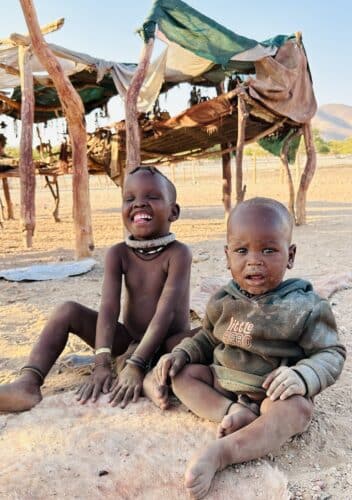
Our guide, Ramon, drove us an hour or so from Hoanib Valley Camp to a tiny Himba village consisting of just four or five teeny cone-shaped huts. Created using a mixture of mud, dung and straw over a wooden frame, these traditional dwellings are designed to be easily taken down so the semi-nomadic people can move at will.
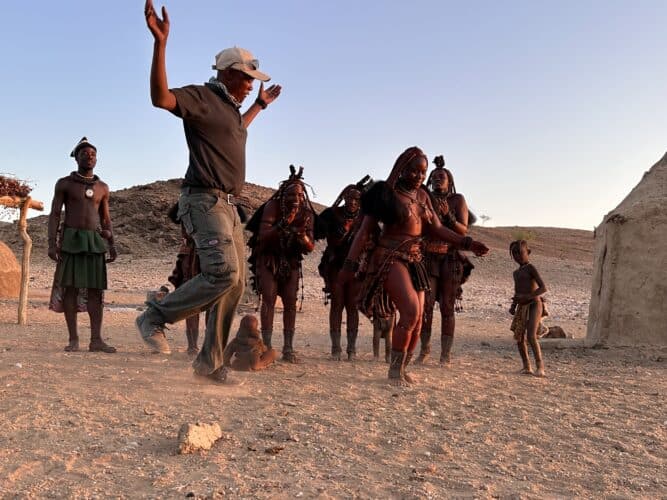
All the men of the village, bar one, were out tending to their goats. The remaining man was tasked with an important job, to keep guard at the eternal fire, and we were instructed not to walk between him and these sacred flames that keep the villagers in touch with their ancestors.
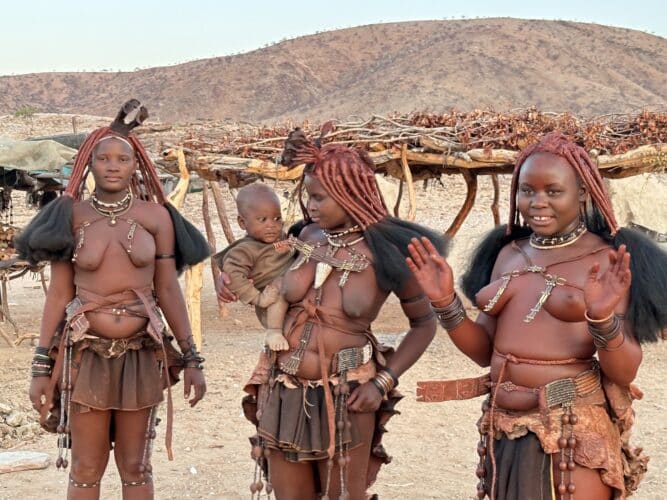
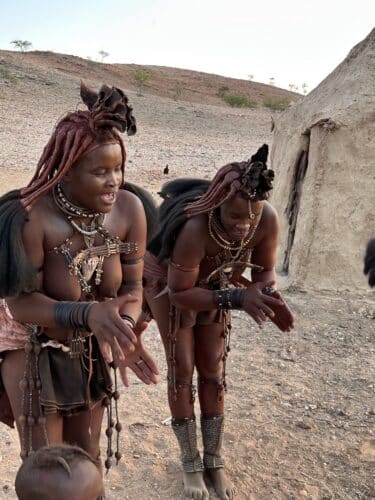
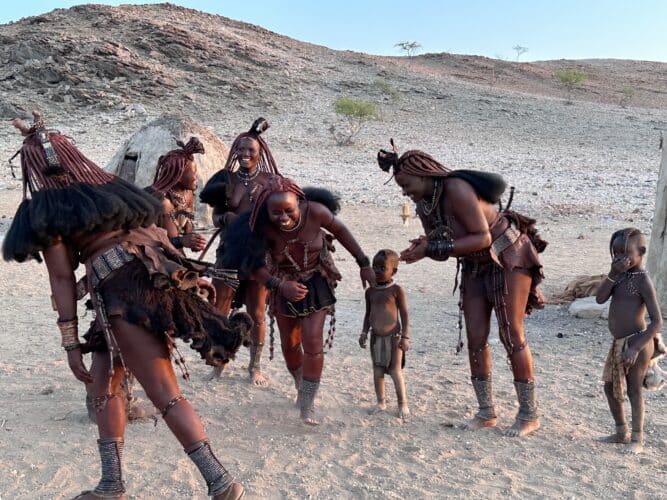
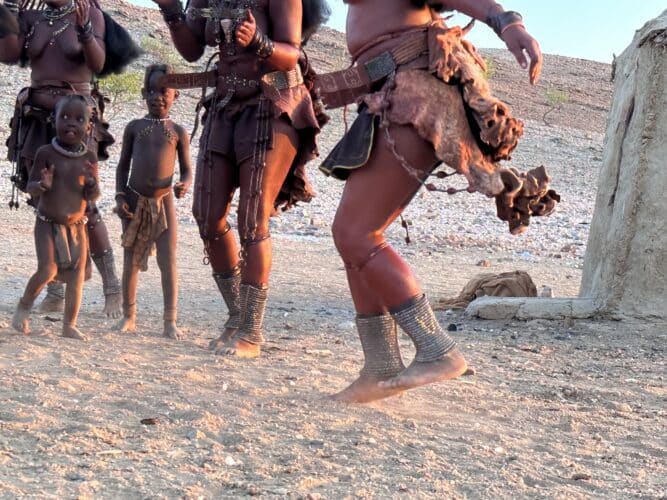
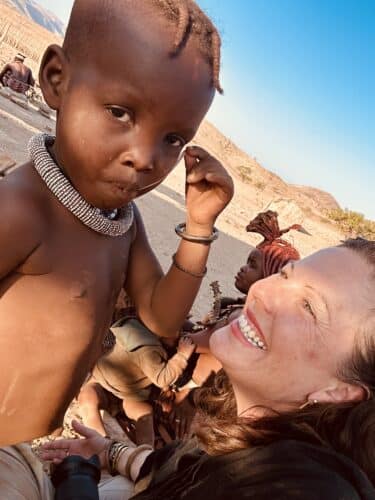
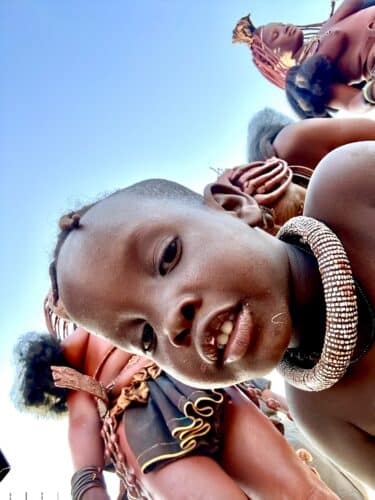
No matter, because while the village children were adorable, the physical camp fascinating and there was even a cute dog, it’s the Himba women who are the stars of the show here.
About the Himba
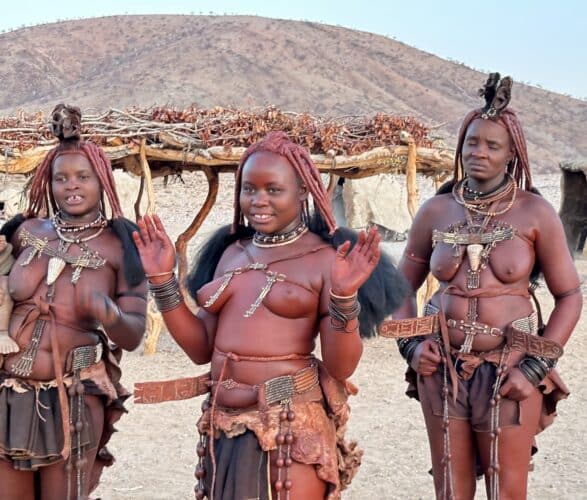
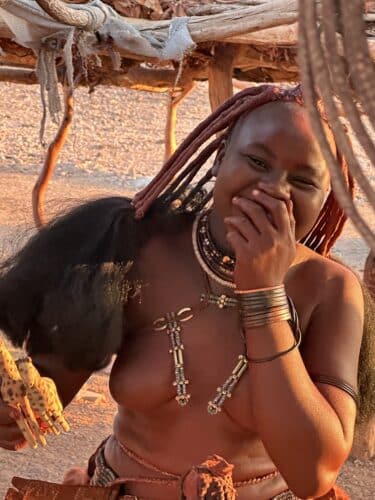
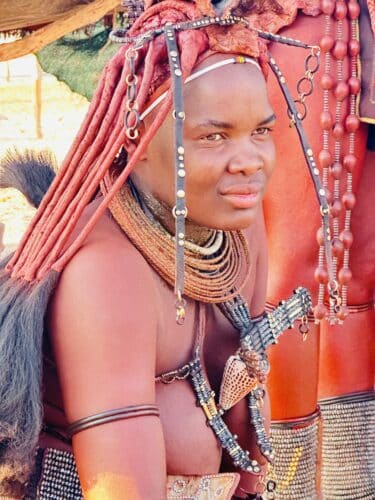
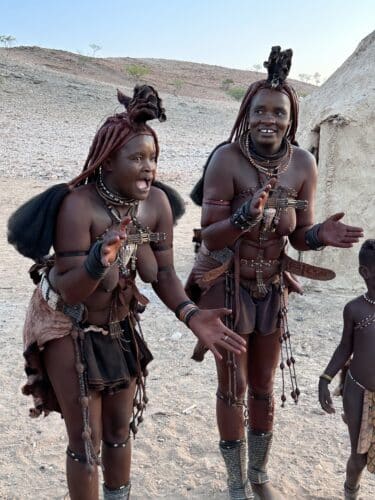
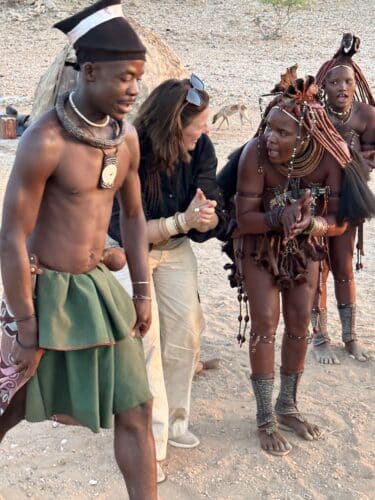
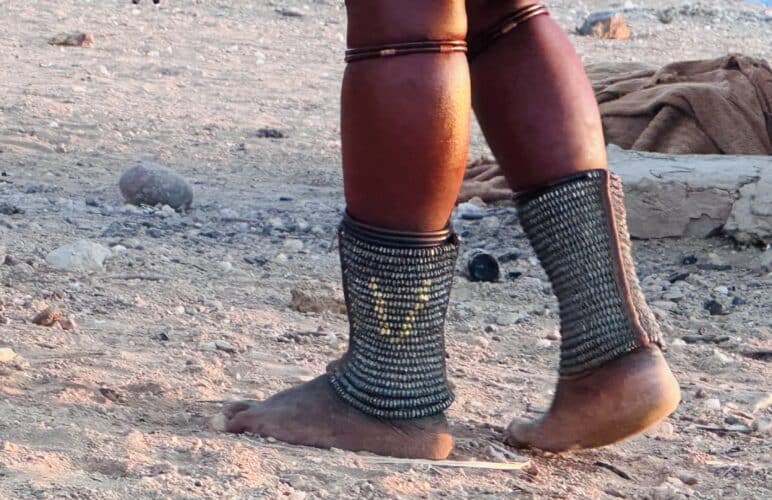
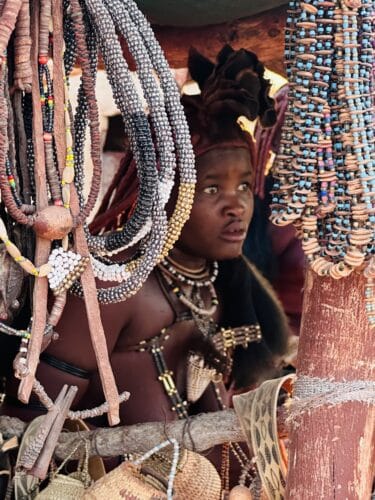
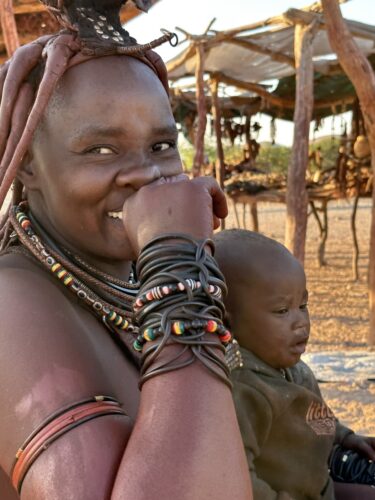
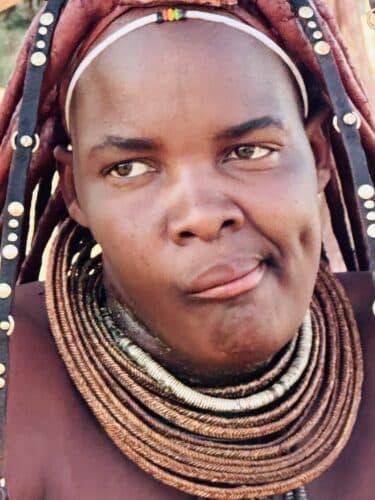
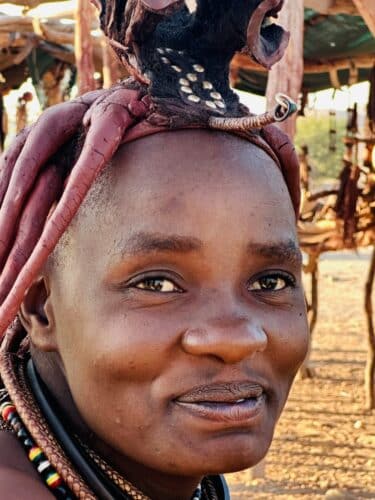
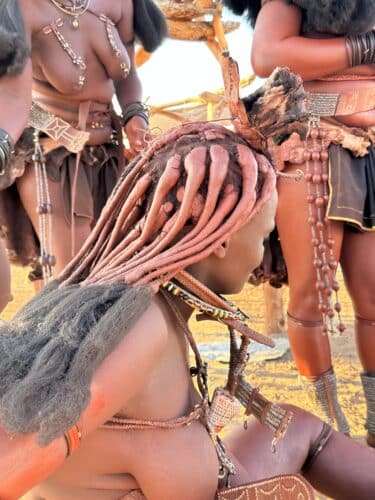
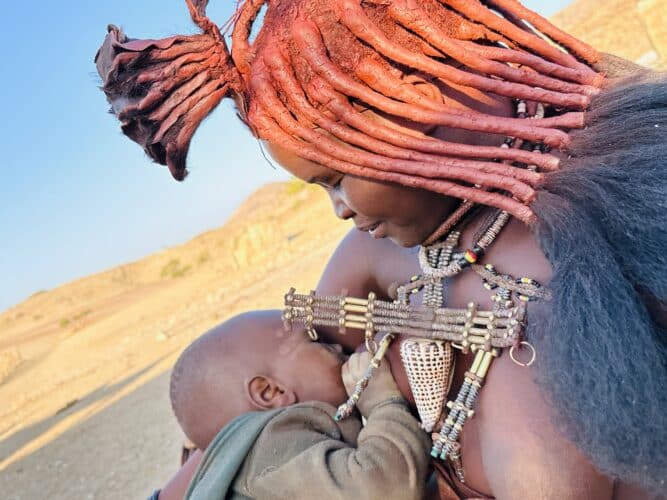
Their traditional clothing is magnificent. They wear a simple, short skirt made from goat hide, iron bracelets on their ankles, shoes (if at all) made from leather or discarded car tires… and nothing else on the rest of their bodies other than a glorious tangle of jewellery and ornaments. Every item is symbolic and we spotted pieces made with everything from beads, studs and cloth to leather, metal and bone fragments.
The most important piece of jewellery is a necklace called an ohumba. Featuring a large white shell from Angola that hangs between the breasts, it’s a symbol of fertility and given as a gift to a mother following the birth of her first child.
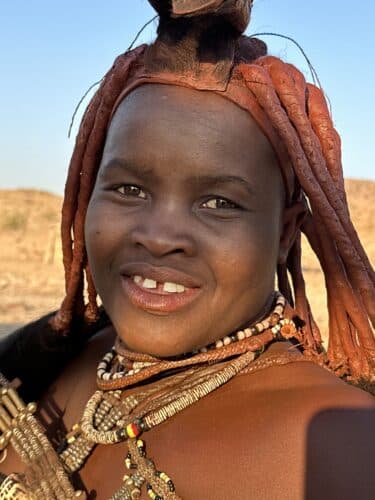
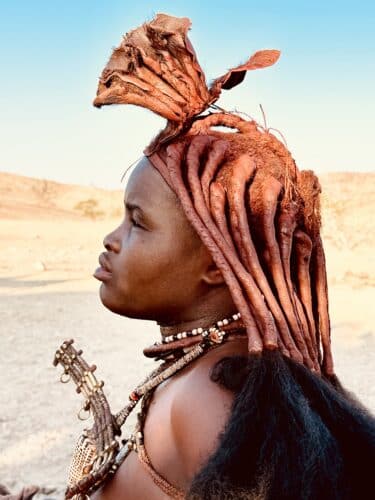
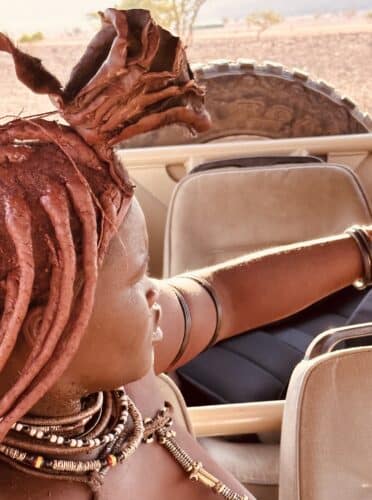
The statuesque Himba women are most famous, however, for the distinctive red ochre paste that they slather on their skin.
To make the paste they grind the ochre into a red powder and then mix it with animal fat and <omazumba>, which comes from the resin of Namibian myrrh. The resulting paste, called otjize, offers protection from the sun, is a good repellent against insect bites, and has the most gorgeous fragrance.
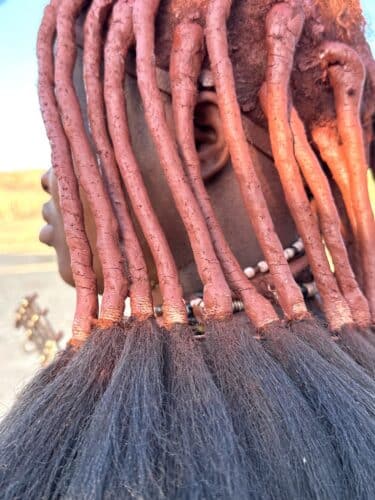
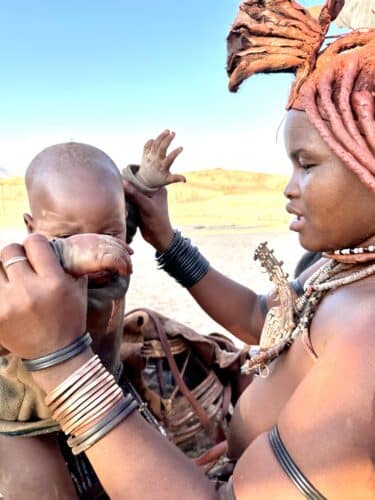
And otjize is not just body paint: Himba women also use the red paste to cover their intricately styled hair, which features the coolest dreadlocks you’ll ever see. Hairstyles really mean something in the Himba community: they indicate the social status of a person, and the women spend hours creating the most elaborate hairstyles to reflect this. Once they’ve had their first child the women also don a leather erembe headdress, which they wear throughout their lives.
The Himba people live in one of the most extreme environments on Earth, and water is incredibly scarce. It’s considered sacred, and only married men are allowed to use it for washing – and even then only for special religious ceremonies.
As such, as well as applying the red ochre paste to their bodies multiple times a day, Himba women also engage in a daily “smoke bath” ritual. This involves using charcoal to burn Omuzumba and using the smoke to purify their bodies and fragrance their clothes, kind of like incense. As foreign as this concept may sound to the Western ear, it’s incredibly effective and wonderfully fragrant. The routine is intriguing, and their entire aesthetic is utterly compelling and beautiful.
But Himba women are not just there to look good. They work hard. On an average day they’ll collect firewood, carry water, milk the cows and goats, cook and serve meals, raise the new members of the tribe, and make exquisite jewellery and handicrafts.
The latter were on display in a kind of sheltered, open-air market stand in the village, and it was a pleasure to purchase some hand-carved wooden animals, pretty bangles and beautifully decorated wooden bowls. There are plenty of travel experiences where you end up buying locally made products, and many of them can feel, let’s say, inauthentic (aka forced). This experience was not like that. The Himba women had been so generous, opening up their village and their lives to us, that we were only too pleased to support them by buying a few souvenirs.
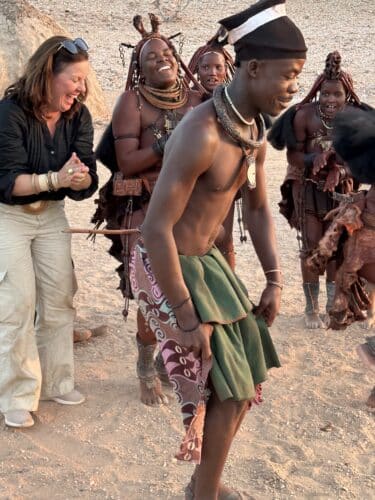
Through our interpreter, Ramon, they’d chatted with us for hours, demonstrating how they crush the red ochre to make otjize paste, and burning Omuzumba so we could smell its gorgeous scent. They sang and danced for us, shared insights into their lives, and let us play with their gorgeous children. They were very interested to look at photos and videos on our iPhones, especially of Danica’s children, but their heads almost exploded when they asked to see photos of my kids: being child-free is simply not an option – or even a consideration – in their world.
Something that surprised us
But the videos that made them truly excited? That they would have happily watched for hours? I would have expected the answer to be oceans, or lush green gardens, or maybe bustling modern cities filled with skyscrapers: something completely different to their everyday reality. But all they wanted to look at was footage we’d taken just a few days earlier, of elephants swimming in a waterhole in Etosha.
According to Ramon, elephants were once common in this part of Namibia, but they moved on long ago in search of water. And the Himba simply missed them and were fascinated by them, and their playful nature in water. We felt blessed to see such raw emotion and feel genuinely connected.
Plan my Himba experience