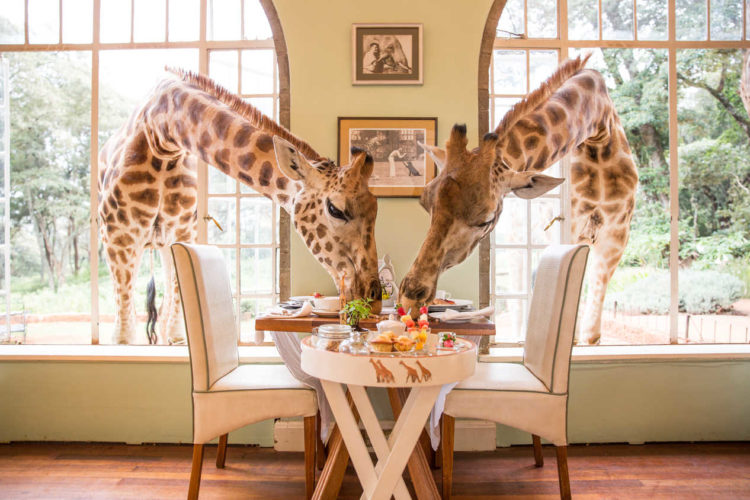
We wanted to see the giraffes
We forgot to tell our kids why they mattered
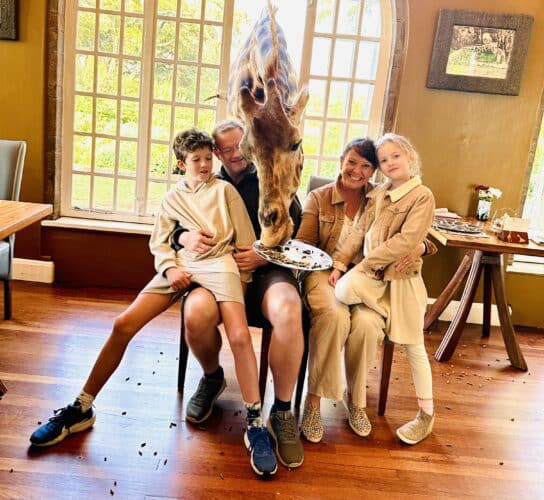
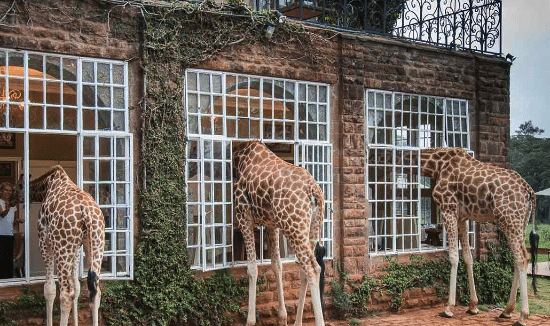
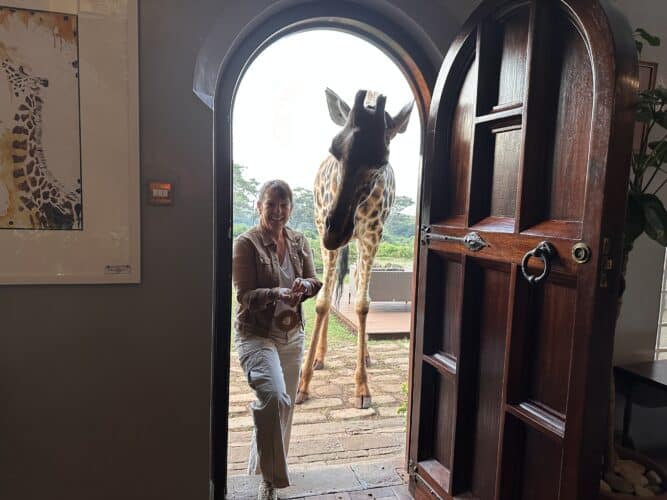
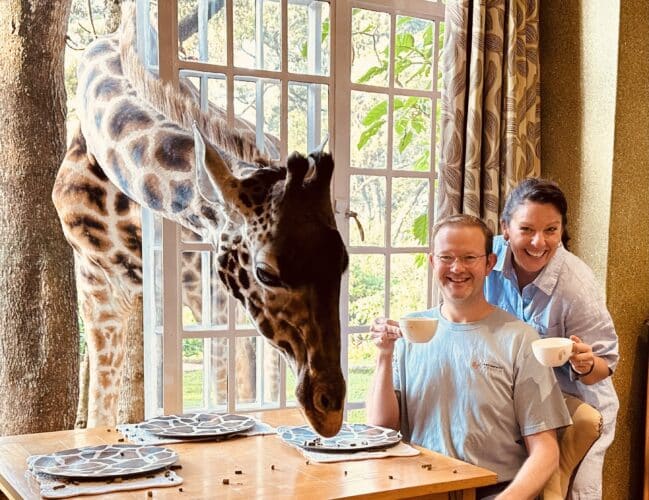
There’s a photograph that lives on social media in about ten thousand variations. A person usually smiling, usually at breakfast, leaning toward a Rothschild giraffe as it stretches its long neck through an open window, lips reaching for a pellet. The light is golden. The moment looks effortless. We wanted that moment for us and the kids, and the photograph. We’d wanted it for years.
So we went over a year ago now with the kids. We stayed at Giraffe Manor in Nairobi, Kenya which is one of the most iconic properties in Africa. Set in a leafy suburb of the city and home to a resident herd of Rothschild giraffes, it’s part of a genuine conservation initiative to protect one of Africa’s most endangered giraffe subspecies.
We want to be clear: the Manor itself is extraordinary. The architecture is grand and warm. The food is lovely. The staff are genuinely kind. And the work being done to protect Rothschild giraffes (fewer than 3,000 remaining in the wild) is real and important.
But we got something wrong before we even arrived. And it took our children’s disappointment to show us what it was.
What we did and didn’t do
We told the kids about the beautiful building. We told them there were giraffes on the property that you could get close to, feed, and learn about. We mentioned, briefly, that it was part of a conservation project. But we didn’t tell them the stories.
We didn’t sit down with them beforehand and explain which giraffe was which, who was the grumpy one to avoid, who had the longest tongue, who was the boss of the herd. We didn’t give them the language to understand or get inquisitive about looking closely, noticing the differences so they could feel like they were genuinely meeting individual animals with a role to play in a bigger conservation picture.
We focused on the experience as an aesthetic with the historical and stunning manor, the giraffes at the window, the moment, rather than stories that could educate and inspire. And children, it turns out, are far less interested in aesthetics than adults give them credit for.
They want to know things. They want stories. They want to feel like the world has been unlocked for them, not just displayed and that people will take the time to share stories with them so they may learn, grow and form their own opinions.
What actually happened
We arrived in the afternoon at Giraffe Manor with kids ready to check in. What we found was a large group of guests, the kind of group that moves through a space as though it exists specifically for them. They were first to every feeding point crowding across the entire length of the terrace. They’d taken over every table. Lingering long after the moment had passed, not because they were learning anything, but because they weren’t ready to let go of their turn, the desire for the insta shot overtaking any sense of perspective.
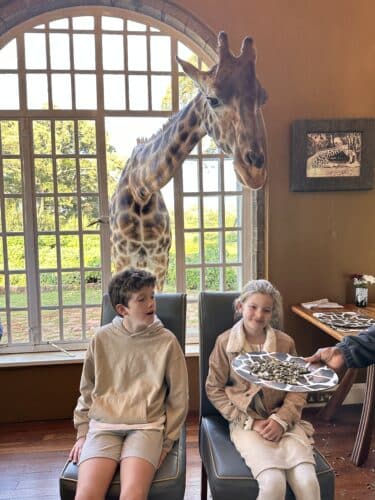
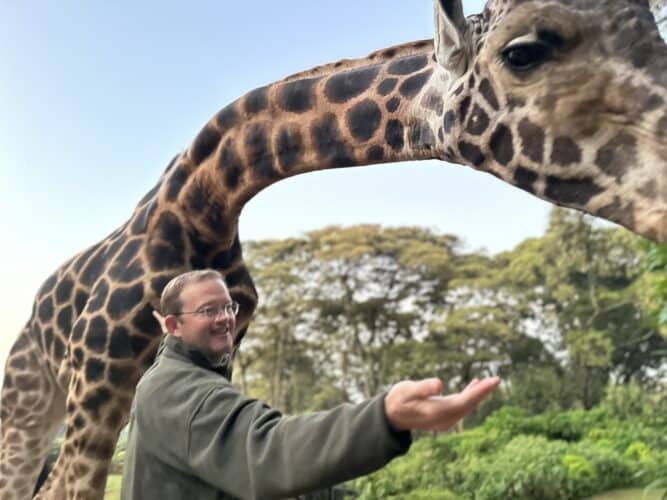
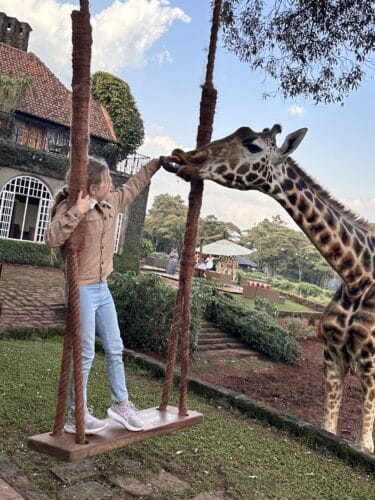
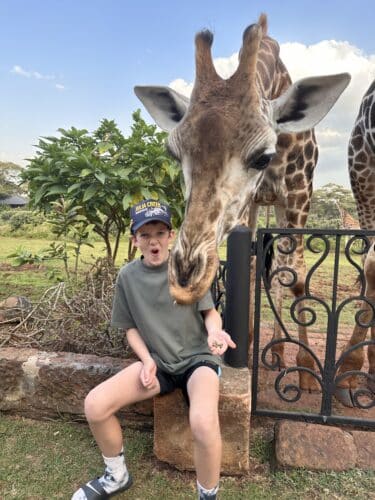
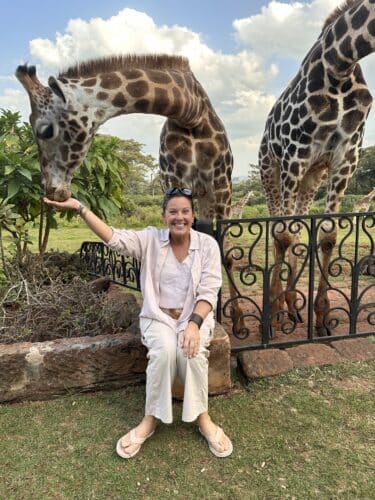
Our children… patient, genuinely excited, waiting their turn the way we’d raised them to seemed to get the scraps of it. Once others had finished, staff realised we were still standing and quickly rushed to offer a basket with some pellet scraps (literally). It was a brief moment with the giraffes because they’d already had a solid feed and were growing restless from the crowd. I don’t blame them! So there was not the time or relative calm for any storytelling. We didn’t learn or hear of each giraffe’s names, personality traits or conservation program context. Just quick handfuls of pellets, arms assisted outwards so the giraffes could eat if they were still hungry.
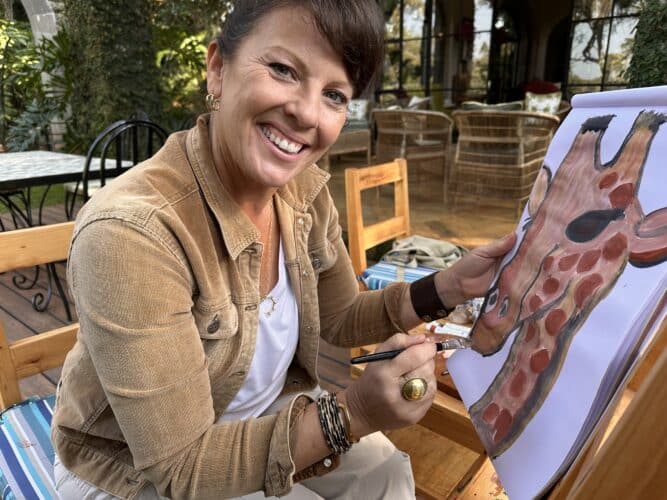
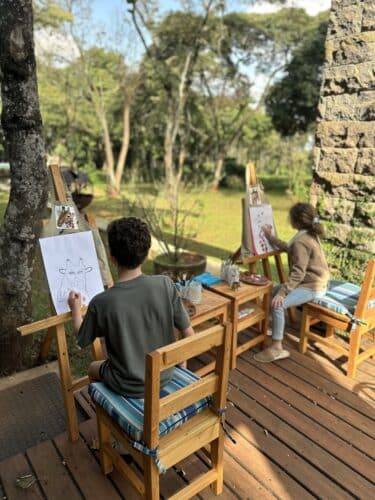
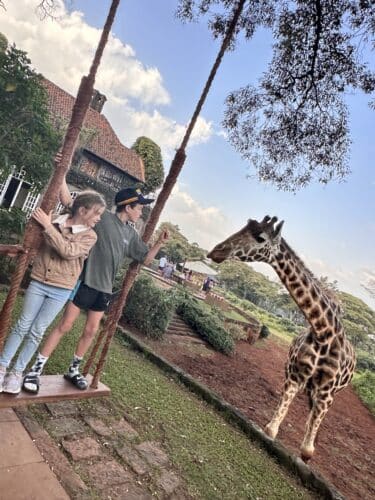
So how did the kids feel? To be honest, they loved the actual closeness to giraffe, the ‘icky’ feeling of long tongues trying to wrap around pellets. But they did leave that afternoon feeling annoyed. They were certainly not devastated.. they just fed giraffes! But they were visibly flat. And I understood exactly why. Interestingly, the next day our kids decided to spend the afternoon feeding time at the retreat where they could utilise paints and a canvas to create their own giraffe portrait.
What I’m trying to say is the magic of an encounter like this doesn’t live in the duration of time with the animals. It lives in the meaning behind it, the stories shared because that’s how you catalyse genuine connection. We had ignorantly outsourced the meaning to an experience we hadn’t properly prepared for. And to top it off because the experience is so popular and always booked out, it’s busy.
The contradiction we’re owning
Here’s the part we need to sit with because we’ve built Encompass Africa on the belief that close-contact animal tourism asks hard questions about ethics and welfare.
Giraffe Manor is not a cynical operation. The African Fund for Endangered Wildlife, that runs the giraffe centre connected to the property, has been breeding and reintroducing Rothschild giraffes into protected habitats since 1979. The giraffes at the Manor are the ambassadors, (the influencers if you connect it to social media) for a program with genuine conservation outcomes. There are arguments, reasonable ones too that this kind of structured interaction, done well, builds the emotional connection that makes conservation matter to people who might otherwise never think about it.
So please don’t think that we are here to relitigate all of that.
What we’re here to say is: we experienced it as tourists rather than as learners. It’s a rooky error on our part. We arrived without the stories that would have made it so much more powerful and meaningful for our children (and ourselves to be honest). And then we let a group of self-absorbed guests become the thing we remembered, rather than the extraordinary wildlife we got to stand beside (not to mention their plight for survival).
So that’s on us.
Would we go back to Giraffe Manor with kids?
100% yes. Completely differently though, as you can imagine.
What we learned is this: slow down before you arrive. Spend an evening with the kids going through the experience and its mission. In fact, we’d love to work with Giraffe Manor to create a simple booklet for families with a photograph, a name, and a personality for each giraffe in the herd. Who’s the matriarch. Who’s the youngster. Who has the particular habit of leaning too far into the breakfast room or simply refusing to leave. We’d talk about what Rothschild giraffes face in the wild, why their numbers declined, and what the reintroduction program has actually achieved so far.
We would never again arrive just to feed a giraffe. We’d arrive to meet one we already know something about.
And honestly? We’d worry far less about getting a table, the perfectly laid out high tea spread, or being first in line. We’d linger at the back. We’d watch each giraffe and notice how they respond differently to the people around them. Then when the moment finally came maybe last on the terrace, maybe the final family in the breakfast room, we’d walk over quietly and connect. Not necessarily to feed them, although if there were still pellets in the bucket the kids would absolutely offer them. But really to appreciate these animals for what they are: ambassadors. And to understand that experiences like this do raise much needed funds to protect a species that needs all the help it can get.
Giraffes as a whole are in trouble. In 2023 I spent time with Stephanie Fennessy from the Giraffe Conservation Foundation in Namibia and heard the stories firsthand. So a heartfelt shout out to Giraffe Manor, to Stephanie and the entire GCF team, to the Ruko Community Wildlife Conservancy in Baringo County where rewilding takes place, and to the rangers working across Murchison Falls and Kidepo Valley National Parks in Uganda where Rothschild giraffes still roam freely. And in Kenya – Lake Nakuru, Ruma National Park, Mwea National Reserve, Soysambu Conservancy and the Kigio Wildlife Conservancy to name a few. The work being done across all of these places quietly and consistently is extraordinary.
Because as a family we’ve been lucky enough to see these creatures in their natural environment moving across the horizon with that slow, gravity-defying grace that makes them look like something the earth invented just to see if it could. The pellets at the window are a pale version of that.
But the story, the real one, told properly and felt with all the senses… that’s what stays with us.
The lesson we took home from
Giraffe Manor with kids
Conservation projects matter. We believe that with everything we have.
But they only matter to visitors if visitors arrive ready to receive the message. And in a world that moves fast and furious, where every experience is a scroll, every moment a potential post… the storytelling burden falls on us as parents, as travellers, as people who actually care about this stuff. And it’s our role as designers of safaris to Africa to ensure we can prepare our guests for it so the lesson isn’t lost.
We can’t rely on the physical experience to do all the work. We have to show up having done some of it ourselves.
Our children didn’t leave Giraffe Manor caring more about Rothschild giraffes, although they had fun with the brief moments they had as you can tell from the pictures. They left slightly annoyed about queue etiquette and people’s selfishness and lack of social awareness.
That’s the greatest lesson we took from it and the one that has most shaped how we now talk to families before they travel with us.
Arrive with the stories. The wildlife, wilderness and local people will do the rest.
Encompass Africa — making a difference, one safari at a time.